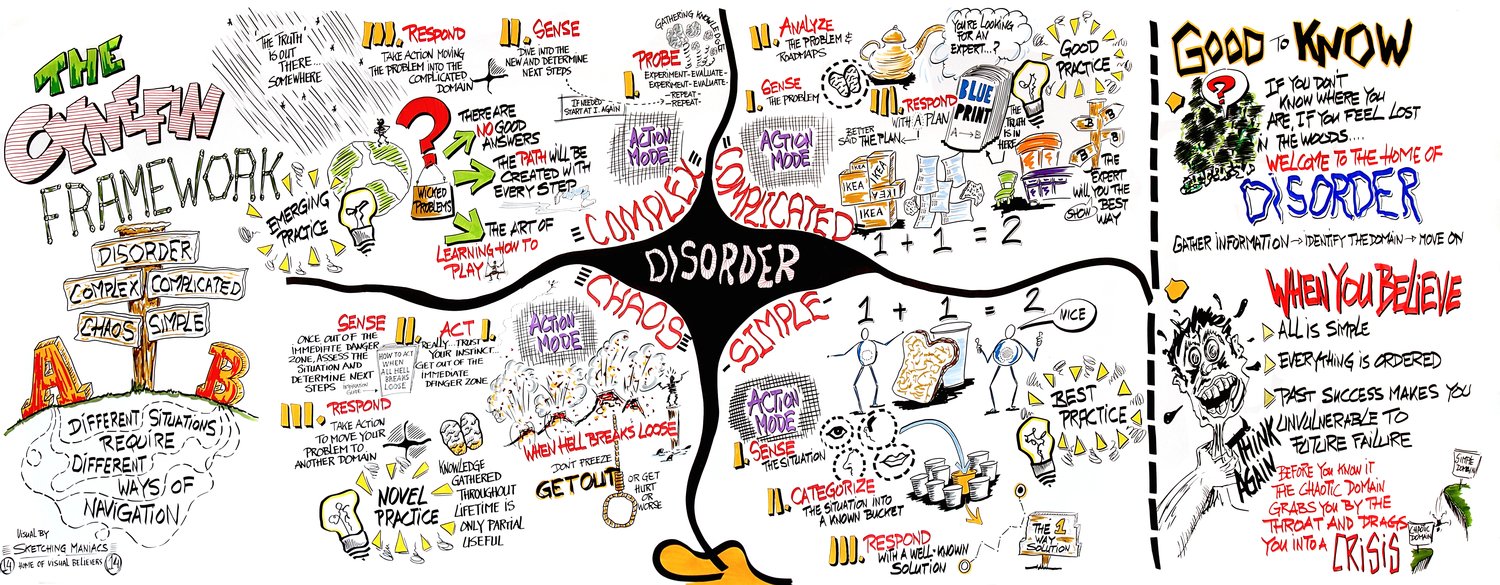
Collaboration is one of the core values I uphold in my teaching practice. I encourage it, foster it and make opportunities for it. I seek it out, both for myself and my students. You see, for me, collaboration is the only feasible answer to the wicked problems that plague our world. For example, neither poverty, inequality, or climate change will make any shift in a positive direction without collaboration. Take climate change for example, the Ministry for the Environment and Ministry of Transport would certainly need to get involved with each other to reduce emissions. They would have to coordinate with some marketing and mass media messaging teams. What about trade and export? How about consumer labelling? Car manufacturers? A wicked problem is not solvable by a few homogenous people. Instead, at its very core is the challenge of bringing together people with diverse interests and potentially even priorities. And our world is riddled with wicked problems.
We have created these wicked problems, and if we are to help our students navigate and potentially even resolve the complexities of these wicked problems, then they will need to be able to collaborate at a level and scale that few of us have done before.
My focus on collaboration goes beyond my lofty ideals too. There are also piles of research that link collaboration with engagement, and with learning! While for students it has shown to improve both their engagement and their performance (particularly in maths), for teachers we have seen that the absence of a collaborative culture can lead to disengagement (and even low retention rates).
But what do I mean by collaboration? Much has been written about collaboration, and whilst I am no expert, I have come to establish some very clear boundaries in terms of what collaboration means to me, and what it does not.
To me,
- Collaboration is creating something together that none of us could have created on our own (even given the time).
- Collaboration is complex (in the complexity theory sense). You cannot make predictions of what the outcome will be, because you cannot know the outcome of it before you start. New possibilities emerge from your interactions.
- Collaboration is embracing diversity to create new possibilities and combinations.
But, I also think that,
- Collaboration is not delegating. And cooperating is not collaboration either. This is task sharing, it is not creating together. That said, sometimes we might delegate or cooperate in our collaboration process. It is just that delegation is not a synonym for collaboration. When we cooperate, the parts are doing different things that fit together into a whole, like doing the chores. Tonight I will do the dishes while you the the laundry. When we collaborate, the parts fit together to create something more than the whole. In other words, the sum of the parts is bigger than the whole.
Collaboration then is a series of interactions that attempt to nudge in a particular direction, leading to emergent possibilities. Or in less big words, collaboration is the interactions between people, trying to work towards a common purpose, leading to the creation of possibilities beyond what any one of those people could have imagined on their own.
As we all know however, collaboration can be tricky business. There are too many variables to control all of them. People have varied priorities, emotions and egos to juggle. It usually takes more time than what we thought, and almost always takes more time than what we have available. Frequently, everyone doesn’t always contribute equally because sometimes one person slacks off, or one person takes over and does all the work. Everyone isn’t always accountable; some people miss deadlines whilst others will work deep into the night to make sure they do meet the group’s deadline. And so, these missed deadlines lead to resentment in the group. What’s more, there are also all kinds of social and cultural power dynamics at play. For example, women tend to be interrupted more, and their ideas are often taken more seriously when the same ideas are suggested by a man. The series of challenges is endless. How then, do we help our students navigate this infinitely complex space more effectively than we have in the past?
Over the past two years, I have been experimenting with various strategies in my classroom to help students deal with the complexity of collaboration. Below are a few of the key ideas and the strategies that support them that I have tried.
- Design tasks that require collaboration, not just cooperation.
It is human nature to take the path of least resistance. Hence, if collaboration is not necessary, why would you do it? Hence, tasks where students are asked to collaborate should be designed with enough complexity and richness to require collaboration for success. In this way, students have to deal with the barriers of collaboration, rather than someone taking over a task and doing it all themselves. This might be done my designing tasks that draw on interdisciplinary skills. For example, solve this really complex maths problem, and then communicate the thinking process in a visually engaging way. It requires the ‘maths expert’ to communicate and share their maths problem solving, whilst it requires the ‘design expert’ to make sense of the ‘maths expert’ thinking. The ‘design expert’ has to work with the ‘maths expert’ to then translate the maths thinking into a visual story, and the ‘maths expert’ to continue checking the visual story for the maths.
- Choose authentic tasks in the real world that have accountability beyond the classroom.Schools have a tendency to over simplify things (I could write a whole book about this alone). However, in the real world things are often more complex than the contrived simplified tasks we give students at school. Authentic contexts amplify the complex and requires students to practice navigating these. When there are too many variables for one person to control, they have to give up some control if they are to be successful. And further, authentic contexts usually mean authentic stakeholders. It requires students to move beyond what ‘they want’ towards meeting the needs of others. In order to collaborate, it is key that we are able to make sense of the needs of others, rather than becoming trapped by our own ideas and paradigms. This might look like working with a local business to design a product for them. It would require students to identify the needs and constraints of the business, and design from their perspective. Ideally, you would also then weave it the many elements this involves, including marketing, food costs, profit margins, etc.
 |
Year 9s and 10s designed games for the year 7s and 8s to teach them about climate change.
|
- Drawing on diversity should be a requirement for success.If a task could be easily completed by one person working by themselves, the task was not complex enough. However, when students have to draw on the diversity of others to be successful, it sends a message that diversity is a resource and is valuable. As a result, students are required to find ways to work with diversity, rather than to avoid it.
One of the ways that I attempt to help students use diversity as a resource is in the way roles are assigned to group members. Rather than students being assigned particular roles in groups, for example, time keeper, scribe, etc. students instead identify the strength or expertise they bring to the group, and this becomes the contribution they make. This moves away from delegating tasks for the convenience of ‘easy’ teamwork, but instead recognises that each participant in a group brings diverse expertise and the roll of the group is to seek ways to draw out that expertise to connect and recombine it with the common purpose of the group. In the past, I have set this up more diverse groups by identifying four groups of skills relevant to a rich task in class, such as people skills, creative skills, problem solving skills, planning skills. Students then have to choose a skill group with which they most strongly associate. Groups are then constructed to contain a mix of the different skills groups.
Other ways I have done gone about this is to ask the class to complete a Google Form that creates a mini profile for them based on the range of skills needed for completing a task (for example). I then choose group leaders. These leaders are then put around a board room table in a private room away from the rest of the class. The group leaders are provided with the profiles of the class and are then asked to assign the class to groups, so that each group contains an appropriate mix of skills. Usually they are also provided with additional parameters such as must contain a mix of genders. I really enjoy using this strategy because it pushes students to work with more diverse students who might be on the periphery of their friendship circles.

- Acknowledge and embrace the complexity.
It is important that students know that collaboration is not always smooth sailing, but that what is more important, is working through the turbulence. In other words, we actually need to teach students strategies for managing dysfunctional groups (I would hazard a guess that we have all at some stage been part of a dysfunctional team, and probably could have managed it better). This highlights that collaboration is not without challenges, but rather about working through the challenges. We emphasise that we area learning to collaborate, and that is one of the major learning objectives of the lesson.
One of the ways that I show students how to navigate a dysfunctional group is by making it more explicit and normalising the challenges so that students can recognise it, and deal with it. At the start of a group work session, we often unpack the issues we encounter when working with diverse people in a group. We write them on the board and make them explicit so that they can be recognised. We then discuss strategies for dealing with these challenges. We then identify one or two strategies and all focus on trying it out in the group session for that lesson. We then reflect on its use. Next lesson, we might introduce another strategy or keep practicing using an existing one. Some of these strategies include identifying a group member who is off task, and then rather than asking them to get back on task, ask them to help you with a really specific but easy task. Often group members don’t contribute not because they don’t want to, but because they don’t know how to. Or when a student is struggling to contribute in a group, give them the pen/laptop/etc. This means that they dictate the pace, rather than the group members who dominate by taking over and doing all the work. This often means the conversation slows down and becomes more inclusive. If a student is taking over, ask them not to use the pen/laptop/etc, but instead focus on communicating their ideas to the group. This means they have to communicate their thinking with their group members, rather than their group members simply sitting around watching them do all the work. - Recognise the roll of communication in collaboration, and facilitate and develop it.One of the challenges with collaboration is communication. Unless we can actually get our ideas out on the table, they remain confined to our own thinking. Getting our idea out on the table makes them available for others to play with, to recombine with their own, to develop. Knowing what questions to ask, to draw out another’s thinking is a key aspect in facilitating collaboration. In the classroom, this has involved teaching students to use question cards (actually intended for teachers to better draw out student thinking), to draw out each other’s thinking in discussions. It has helped students not only have deeper discussions and get their ideas out on the table, but it has also allowed them to have conversations with more diverse peers.

Without question, there is so much to this collaboration can of worms that I can't even begin to touch on here. The thing about collaboration, precisely because of its complexity, is that it is fertile grounds for exploration, experimentation and trying new things. It is ambiguous and sometimes just plain hard. But it is also the complexity of collaboration that keeps me coming back to it as a key ingredient for a more hopeful future. And although I am no expert in collaboration, I hope that my enthusiasm for exploration in this space, might make some contribution to the collaborative possibilities that my students might navigate in their future.